The Economics of How Africa Hates Its Poor as Ruto Scapegoats Refugees and Foreigners
By Muoki Musila
Crackdown on the Most Vulnerable
On September 2, President William Ruto stood before Micro, Small and Medium Enterprise traders at State House and delivered an ultimatum that foreign hawkers and small shop owners have to close their businesses or be shut down by force. Setting a crackdown for September 7, he framed the move as protection for Kenyan entrepreneurs against hawkers and petty traders he said had no business competing with citizens for a living. The decree also served to preempt the Local Content Bill already before Parliament expected to soon make the ban permanent in law.
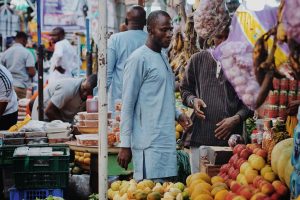
It is worth pausing on the cruelty of the target as this is not a crackdown on multinational conglomerates or offshore tax dodgers that the government decries every day. It is a crackdown on the woman selling sliced watermelons in Kitengela, the man repairing shoes outside a matatu stage, or the teenager hawking phone accessories in traffic. These are, almost by definition, the poorest economic actors in the country, many of them refugees and low-income migrants from Burundi, the Democratic Republic of Congo, Somalia, Ethiopia and elsewhere. It is, therefore, worth asking of the African continent why it hates its most vulnerable and poorest as the trend starts to replicate across the continent.
Survivalist Livelihoods Hurt No One
A majority of refuges and foreigners came to Kenya with nothing and built survivalist livelihoods precisely because the informal economy is the one place that asks no capital and no connections. Across Sub-Saharan Africa and Africa, the International Labour Organization estimates that roughly 85% and 83% of all employment is informal. Kenya is currently estimated to be home to about 857,000 registered refugees and asylum seekers with nearly 14% living within urban settings.
Moreover, self-employment accounts for more than half of non-agricultural informal work, and that at least eight in ten young workers have no path into the economy except through it. This is not a marginal sector populated by cheats undercutting real businesses but, for most ordinary Africans, this is the economy itself. To declare war on foreign participation in it is to declare war on the last safety net available to people who have already lost everything else. Most of the target population is in the country as a consequence of wars fleeing conflicts or economic hardship at home or simply seeking better opportunities under the supposed to be liberalized East African Community.
The bitter irony is that Kenya has been here before as the aggrieved party within the region and beyond. In July 2025, Tanzania’s Ministry of Industry and Trade gazette the Business Licensing (Prohibition of Business Activities for Non-Citizens) Order, barring foreigners, including citizens of fellow East African Community states. This cut across retail and wholesale trade, mobile money agency work, small-scale mining, salon services, phone repair, tour guiding and more sectors.
Kenya’s own Trade Cabinet Secretary, Lee Kinyanjui, publicly condemned the order, arguing it would hurt both economies and violated the EAC Common Market Protocol’s guarantees of free movement of labor and the right of establishment. Traders’ associations and legal scholars warned it could trigger a case before the East African Court of Justice. Fourteen months later, Nairobi is set to enforce an almost identical policy against a wider set of nationalities, with less legal process and a harder deadline. The lesson African governments seem to be drawing from each other is not “don’t do this” but “do it too, before someone else’s hawkers dominate your street corners.”
A continent at war with Her Children
That lesson is metastasizing well beyond East Africa into some of the most developed and advanced economies on the continent. South Africa offers the starkest warning of where this road leads. Since April 2026, vigilante movements such as Operation Dudula and March and March have staged escalating protests against undocumented migrants in Johannesburg, Pretoria and Durban, several turning violent and fatal. Human Rights Watch documented attacks on foreign-owned shops and physical assaults on traders’ activities that have driven thousands of migrants to camp outside consulates and border posts out of fear.
Commentary on the violence in South Africa noted that residents’ grievances over crime, unemployment and competition repeatedly found their outlet in attacks on one identifiable group; foreign nationals in the informal economy, whose shops, once destroyed, take down local landlords, employees and suppliers along with them. What began as economic resentment has curdled, again and again since the deadly riots of 2008 and 2019, into ethnic violence. Ruto’s administrative decree is not South Africa’s mob politics, but the underlying logic, that a foreign trader’s poverty and vulnerability make him fair game for exclusion, is the same one that gave South African vigilantes their alibi.
“… bad economics if history is anything to go by as foreign-owned small shops and hawking stalls are rarely displacing large-scale Kenyan investments.”
Moreover, the pattern is neither confined to these two countries as Zimbabwe, Ghana, Nigeria, Eswatini, Zambia, Botswana and Uganda have all, in various forms, reserved specific low-capital trades for citizens in recent years. Closer home, Tanzania’s own trade officials cited several of these precedents when defending their 2025 order. A continent that likes to describe itself, in African Union speeches, as one people separated by colonial borders is quietly building an architecture of economic nativism, sector by sector, country by country.
The Hypocrisy of Lofty Speeches

This is where the hypocrisy becomes structural rather than incidental, albeit across the continent. Kenya is a signatory to the EAC Common Market Protocol, as are other seven members. The protocol commits partner states to the free movement of labor and services and the right of establishment and residence for one another’s citizens. At the continental level, the African Continental Free Trade Area (AfCFTA) is meant to be paired with the African Union’s Protocol on Free Movement of Persons, Right of Residence and Right of Establishment. Adopted in 2018, it has the explicit goal of letting African traders, workers and entrepreneurs operate anywhere on the continent.
Interestingly, has been ratified by only four of the fifty-five AU member states, Rwanda, Niger, Mali and São Tomé and Príncipe, conspicuously nowhere near the fifteen needed for it to take legal effect. Ruto himself, speaking to fellow African leaders in Congo-Brazzaville earlier this year, argued that when entrepreneurs and business people cannot travel freely, the whole continent loses. While right in this instance, a government cannot coherently champion free movement on a summit stage while ordering police to hunt down the continent’s poorest movers on its own streets a few months later.
A False Start on African Integration Theory
AfCFTA’s promises gains, which the African Export-Import Bank and the UN Economic Commission for Africa estimate could lift intra-African trade substantially over the coming decade. This depends on exactly the kind of cross-border economic activity that hawkers, small traders and informal cross-border merchants already perform every day, informally, at their own risk. Punishing them is not a side effect of protectionism but rather a deliberate and ill-informed direct assault on the theory of the case for African integration itself.
It is also, on its own terms, bad economics if history is anything to go by as foreign-owned small shops and hawking stalls are rarely displacing large-scale Kenyan investments. Rather, they are often filling gaps in supply chains, offering goods at lower markups in underserved neighborhoods, employing local youth as porters, cleaners and shop assistants, and paying rent to Kenyan landlords and county governments. Shut them down and, as South Africa’s experience shows, the damage cascades outward to the citizens who depended on them as landlords, employees and customers, not just to the foreigners who owned them.
So why does Africa keep doing this to its most vulnerable people? Partly because scapegoating the visible poor is cheaper than fixing unemployment, currency instability or the ease of doing business as a hawker is an easier villain than a jobless economy. Partly because xenophobia, once normalized by one neighbor, gives political cover to the next. Thirdly, because refugees and undocumented migrants have no vote, no lobby and, no embassy willing to make noise on their behalf. This makes them the safest possible target for governments needing to look tough. Whatever the intent, this policy will disproportionately break the economic backbone of people who own nothing, employ mostly other poor people, and have nowhere else to go. A continent that cannot resist scapegoating its most defenseless residents while lecturing the world about African unity should not be surprised when that unity keeps failing to arrive.
Disclaimer: The views expressed in this article are those of the author and do not necessarily reflect the editorial position of Liberty Sparks. Liberty Sparks is not responsible for the opinions, claims or statements presented by contributors and guest writers.
Tag:#Ruto #Foreigners, afcfta, African Union, EAC, Refugees, Trade